
Every district produces job seekers.
Fewer produce job creators.
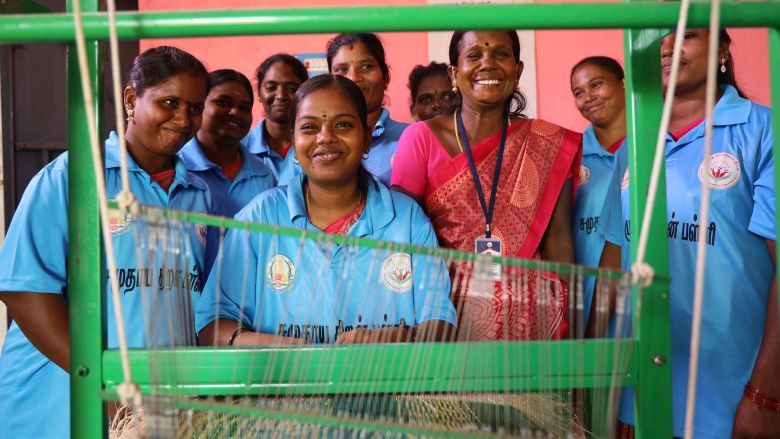
Western Coimbatore has long been known for its industrial culture — workshops, textile units, engineering sheds. But behind this reputation lies something quieter: young people willing to take risk.
Risk, however, requires fuel.
In Kovai district, hundreds of young entrepreneurs accessed structured financial support amounting to significant subsidy and loan assistance. On paper, these are numbers.
In reality, they represent decisions.
The decision to leave secure employment.
The decision to invest in a workshop.
The decision to register a firm.
The decision to employ others.
Credit, in this context, is not relief.
It is acceleration.
The Gap Between Idea and Execution
Many young people in semi-urban and rural belts of Coimbatore carry ideas:
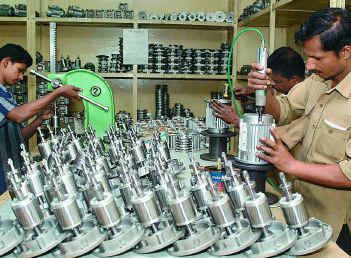
A fabrication unit.
A small engineering workshop.
A food processing unit.
A service centre.
What often stops them is not skill.
It is capital.
Bank loans without subsidy feel risky. Collateral requirements intimidate first-generation entrepreneurs. Family savings are rarely sufficient.
Structured subsidy-linked loans change the risk equation.
When part of the capital burden is absorbed, the leap feels possible.
For over a thousand youth beneficiaries in the district, financial support did not guarantee success — but it lowered the entry barrier.
Lower barriers increase participation.
From Employment to Ownership
The psychology of entrepreneurship differs from employment.
A salaried job offers predictability.
A small enterprise offers uncertainty — and possibility.
Youth beneficiaries often describe the turning point as a moment of calculation.
“If the loan is manageable, I can try.”
Try.
That word defines entrepreneurial beginnings.
With access to subsidy-supported financing running into crores across the district, youth moved from wage earners to asset creators.
Some opened machine shops.
Some started mobile repair centres.
Some entered food distribution.
Some expanded family trades into formal enterprises.
Each new enterprise creates micro employment.
A single workshop might hire three workers.
Three workers earn salaries.
Those salaries circulate locally.
Entrepreneurship multiplies.
Risk Appetite and Institutional Support
Economic growth in districts depends on risk appetite among youth.
But risk appetite is shaped by environment.
When institutional credit is inaccessible, risk appetite shrinks.
When structured financial support exists, risk-taking expands.
In Kovai district, subsidy-linked loans exceeding hundreds of crores were extended to youth and small entrepreneurs over time.
Such volume suggests more than isolated support.
It signals an ecosystem where enterprise was encouraged.
Credit in this context functions as confidence.
Not because it eliminates risk.
But because it shares risk.
The Local Multiplier of Youth Enterprise
Large factories create large employment blocks.
Small enterprises create distributed growth.
When hundreds of young entrepreneurs launch units across the district:
- Supply chains diversify
- Local hiring increases
- Service networks expand
- Tax participation widens
A fabrication unit buys raw materials locally.
A food processing unit purchases agricultural inputs.
A service centre hires apprentices.
Economic decentralisation strengthens resilience.
District economies become less dependent on a few large players.
Youth enterprise adds density.
Leadership and Entrepreneurial Climate
Encouraging youth entrepreneurship requires coordination between:
- Banking institutions
- Subsidy disbursement frameworks
- Skill training bodies
- District administration
During the period when SP Velumani held ministerial responsibilities while serving as MLA for the region, district-level economic support structures operated within aligned channels.
Ministerial oversight allows engagement with financial and rural development institutions.
MLA proximity allows feedback from aspiring entrepreneurs navigating application processes.
Entrepreneurship thrives when systems respond quickly.
Delayed approvals discourage initiative.
Streamlined coordination sustains ambition.
Several young entrepreneurs in Kovai describe the experience as “possible because support was available.”
That availability shifts perception.
When youth believe that institutional pathways exist, they attempt more.
Failure, Adjustment, Persistence
Not every enterprise succeeds immediately.
Some struggle.
Some pivot.
Some expand slowly.
But the existence of credit-backed entry points ensures that failure does not permanently deter participation.
Economic vitality depends not on zero failure — but on repeated attempts.
Structured youth financing encourages that cycle.
It signals that entrepreneurship is not reserved for the privileged.
It is accessible.
Ambition as Economic Policy
Youth entrepreneurship policy is not about temporary employment schemes.
It is about shaping district character.
Western Tamil Nadu’s industrial culture did not emerge overnight. It evolved through generations willing to experiment with workshops and units.
Supporting youth entrepreneurs sustains that legacy.
It ensures that industrial identity does not stagnate.
When a district invests in young risk-takers, it invests in its future production capacity.
Conclusion: Fueling Forward Momentum
The story of Youth Entrepreneurs of Kovai is not about stabilization.
It is about acceleration.
Subsidy-linked loans reduced entry barriers.
Credit shared risk.
Young entrepreneurs built units.
Units generated local employment.
Economic growth at district level depends on courage meeting capital.
When institutional systems align with youth ambition, momentum builds.
Leadership, in this context, functioned less as spectacle and more as enabling structure — connecting policy frameworks with district-level aspiration.
For many young entrepreneurs in Kovai, the difference was not that opportunity appeared.
It was that opportunity felt reachable.
And when opportunity feels reachable, districts move forward.