
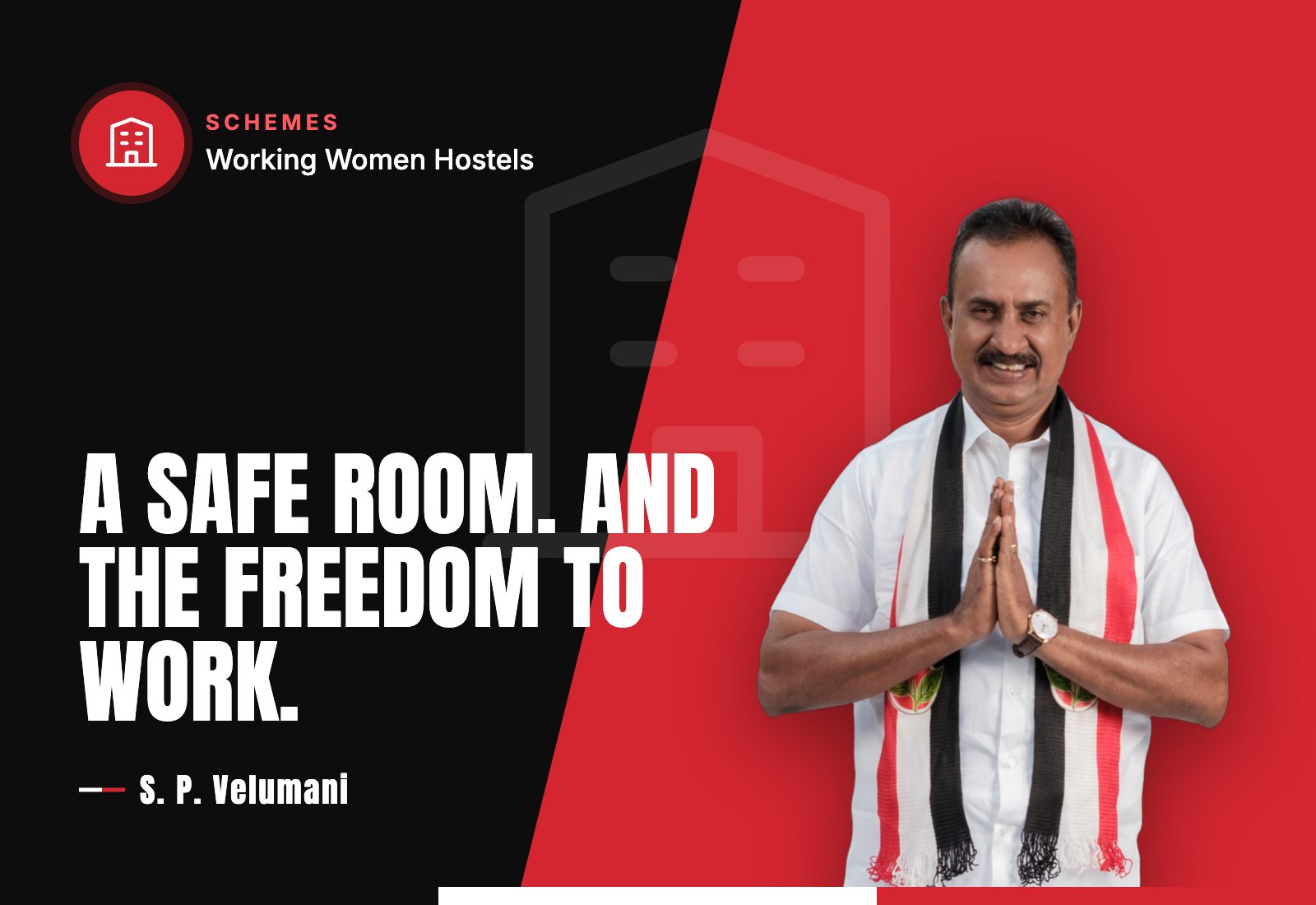
Scheme: Working Women Hostels
For many young women in Coimbatore, employment begins with a difficult decision.
Take the job — and find a place to stay.
Or stay home — and let the opportunity pass.
Private accommodation in cities is expensive. Safety concerns weigh heavily. Families hesitate to send daughters far from home without secure lodging.
Structured Working Women Hostel facilities strengthened safe accommodation access for women across the district over the years.
On paper, it is housing provision.
In lived reality, it is professional permission.
Safety Before Salary
Employment is not only about salary.
It is about environment.
Without safe accommodation:
- Women decline job offers
- Career progression stalls
- Economic independence delays
A hostel offers:
- Secure premises
- Regulated access
- Proximity to workplaces
- Community support
Safety transforms hesitation into participation.
Participation transforms dependence into autonomy.
Infrastructure for Aspiration
Working Women Hostels do more than provide rooms.
They enable:
- Entry into new industries
- Skill training attendance
- Shift-based employment
- Confidence in navigating urban spaces
For many first-generation professionals, the hostel becomes transitional support — a bridge between home and career.
Dignity here is not symbolic.
It is structural.
A secure place to stay removes one of the largest barriers to employment.
SP Velumani: Enabling Women’s Workforce Participation
Working women hostel frameworks require:
- Site selection and infrastructure development
- Maintenance and safety oversight
- Admission transparency
- Coordination with welfare departments
During his tenure as Minister while serving as MLA for the region, SP Velumani’s governance presence in Kovai reflected recognition that economic participation for women depends on protective infrastructure, not merely policy encouragement.
As MLA, he encountered families navigating safety concerns when daughters sought employment.
As Minister, he operated within administrative systems capable of aligning welfare and urban development departments for structured accommodation support.
Leadership in such initiatives lies in understanding that opportunity without safety remains inaccessible.
Ensuring hostels functioned as secure environments required monitoring beyond inauguration.
Infrastructure must remain reliable.
Safety must remain consistent.
Only then does empowerment become practical.
Why It Matters
Women’s participation strengthens local economies.
But participation requires protection.
Working Women Hostels did not create jobs.
They made jobs reachable.
In districts like Coimbatore — where industrial and service sectors expand steadily — safe accommodation supports workforce diversity.
Because independence does not begin at the office.
It begins with a safe place to return at night.