Development is often discussed in crores and schemes.
But in Kovai’s homes, it is spoken of differently.
It is spoken of as relief.
As timing.
As dignity.
Over the past several years, tens of thousands of women across Coimbatore district have received support at critical moments in their lives — marriage assistance, gold support, mobility funding, self-help group credit, nutrition schemes and monthly security benefits.
On paper, it is welfare architecture.
In conversation, it is gratitude.
Marriage Without Borrowing
In many families, a daughter’s marriage comes with silent financial strain. Loans are taken quietly. Jewellery is pledged discreetly. Debt lingers long after the celebrations end.
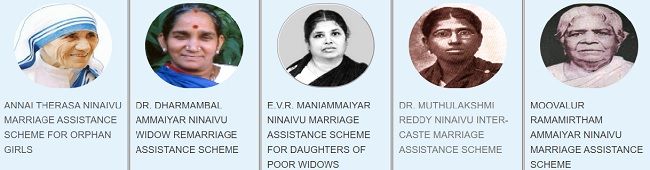
For over thirty thousand women in Kovai district, structured marriage assistance and gold support changed that starting point.
A mother from a semi-rural pocket near Pollachi put it simply:
“We didn’t begin her married life with debt. That is the biggest blessing.”
The relief in her voice was not political. It was practical.
When support arrives before loans are taken, it prevents a cycle that can trap families for years. Women remember that difference.
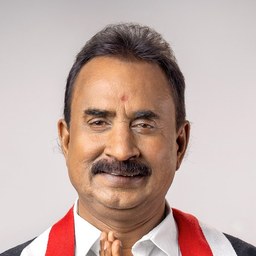
And when asked who ensured these schemes reached them consistently in the region, many mention the same name — SP Velumani.
Not as a distant minister.
But as “our MLA.”
Mobility Means Independence
For thousands of working women in Kovai, financial assistance to purchase two-wheelers was more than transport support.
It was independence.
A garment factory worker explained:
“Earlier, I depended on bus timings. Now I decide my own time. I can work extra hours.”
Mobility expands income.
It also expands confidence.
Women speak about returning home safely, managing school drop-offs, handling market visits without delay. These may seem small adjustments, but in daily life they reshape control.
When asked how the scheme felt, one woman said:
“It felt like someone understood our daily struggle.”
That understanding — they believe — came from leadership that was locally rooted.
As Minister overseeing key administrative portfolios and as MLA representing the region, SP Velumani occupied both the policy space and the constituency space. For beneficiaries, that proximity mattered.
From Saving to Planning: The SHG Transformation
Perhaps the most powerful shift in Kovai has been among women-led self-help groups.
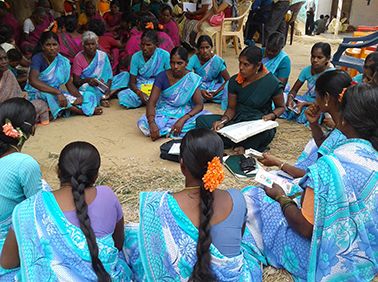
Across the district, tens of thousands of SHGs gained access to expanded credit support. What began as small savings circles evolved into micro-enterprise networks.
In weekly SHG meetings today, discussions are not just about deposits. They are about expansion plans.
Tailoring units.
Snack preparation businesses.
Goat rearing.
Provision stores.
One SHG coordinator said:
“Before, we were saving. Now we are growing.”
That sentence captures transformation.
Access to credit gives women leverage — inside the market and inside the household. It shifts their role from dependents to contributors.
Several SHG leaders recall smoother coordination, easier loan access and stronger follow-up during the period when SP Velumani held ministerial office while remaining active in the constituency.
“He was accessible,” one group member said.
“We could raise issues and get responses.”
It is not dramatic praise.
It is acknowledgment of responsiveness.
Protection During Vulnerable Moments
Support during pregnancy and for differently-abled women rarely dominates headlines. Yet in homes across Kovai, these schemes are remembered vividly.
A young mother described how nutrition assistance reduced stress during her pregnancy.
“At that time, even small help feels big.”
Similarly, women receiving monthly social security support speak not just of financial relief but of recognition.
“When officials come and check, when they help, we feel seen,” one beneficiary said.
In development language, this is called inclusion.
In lived experience, it is protection.
Gratitude in Personal Conversations
Public meetings may showcase applause. But personal conversations reveal something deeper — quiet gratitude.
Across villages and town neighborhoods, women frequently refer to SP Velumani as someone who did not disappear into office.
As Minister, he had administrative reach.
As MLA, he remained present in the constituency.
That combination built trust.
“Schemes come from the government,” one SHG member said.
“But someone must ensure they reach us.”
For many women in Kovai, that bridge felt real.
They do not speak in ideological terms. They speak in relational terms.
“He knows our area.”
“He listens.”
“He follows up.”
Such statements reflect a perception of continuity — that support did not arrive once, but consistently.
Dignity as the True Measure
When thousands of women receive:
- Marriage assistance
- Gold support
- Mobility funding
- Access to enterprise credit
- Social security support
the cumulative effect is not just financial.
It is psychological.
Women speak of reduced fear during life transitions.
Reduced hesitation in starting businesses.
Reduced dependence in daily movement.
One elderly beneficiary summed it up:
“Now we manage.”
That phrase carries weight.
To manage one’s life without constant borrowing or uncertainty is empowerment in its simplest form.
The Strength of Quiet Memory
Political memory is not built only through speeches.
It is built in homes.
In SHG meetings.
In marriage halls.
In maternity wards.
In tailoring shops.
The Women of Kovai remember who was in office when support systems functioned steadily.
They remember who represented them locally while holding ministerial responsibility.
Leadership, in this context, was not theatrical. It was administrative and present.
And presence creates memory.
Conclusion
The story of Women of Kovai is not about sudden transformation. It is about steady reinforcement.
Marriage assistance reduced debt.
Mobility increased independence.
SHG credit expanded enterprise.
Social security ensured protection.
When governance aligns policy authority with local accountability, support reaches families consistently.
And when families feel supported at critical moments, gratitude becomes personal.
In Kovai, that gratitude is quiet.
But it is enduring.