

Every region competes — not only with industries, but with its students.
The long-term strength of Western Tamil Nadu does not depend solely on factories or exports. It depends on whether its young population can remain competitive in a digital, mobile and unequal world.
For the Students of Kovai, the past several years were not about one policy headline. They were about a demographic intervention executed at scale.
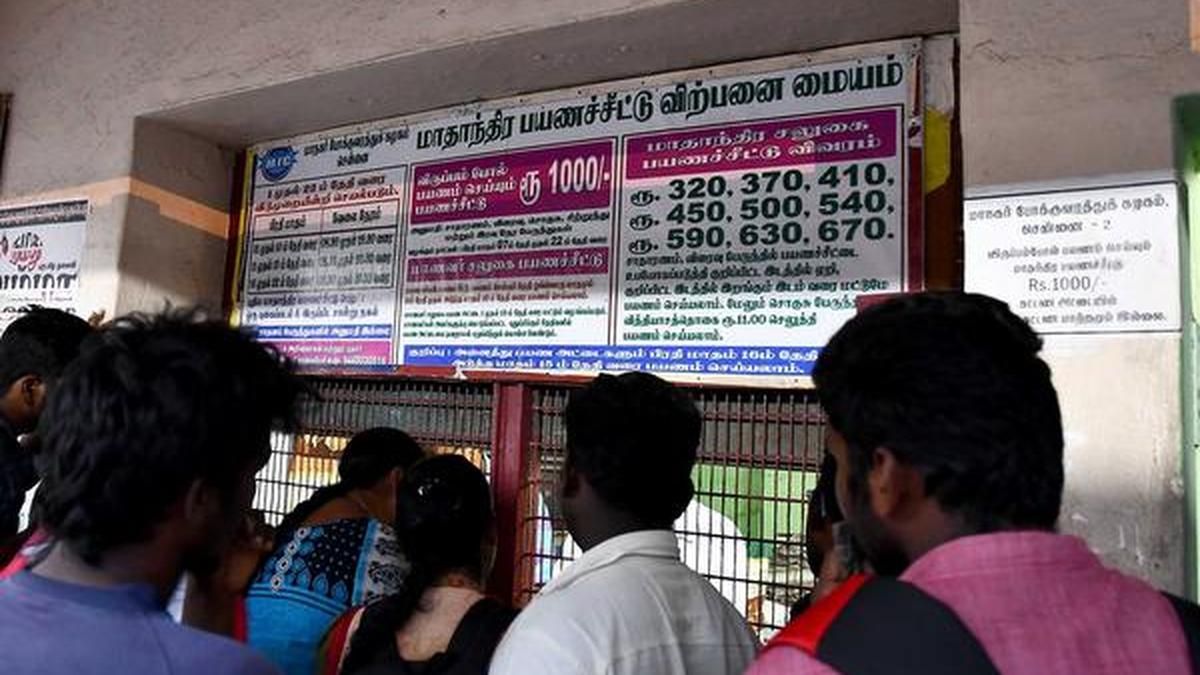
Over a million students accessed free bus passes.
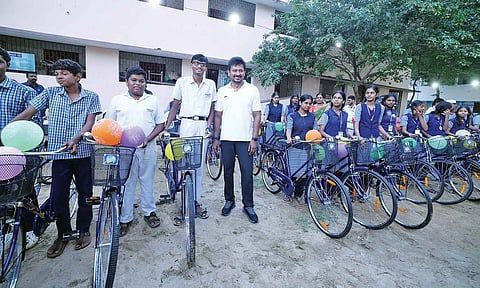
More than a lakh received bicycles.
Over a lakh and a half gained laptops.
Lakhs from marginalized communities received education support.
Taken individually, these are welfare schemes.
Taken together, they form a generational infrastructure.
The Hidden Barrier: Friction
Education dropout rarely begins with ideology.
It begins with friction.
Transport costs.
Long walking distances.
Lack of digital access.
Inability to afford higher-level study expenses.
Each friction point pushes a student closer to exit.
Governance efficiency in education is not about adding new curriculum. It is about systematically removing friction.
In Kovai district, friction reduction was not selective. It was broad-based.
Mobility, digital tools and financial support were deployed across the student population in parallel.
This is not accidental design. It reflects structured sequencing.
Mobility as Educational Architecture
Nearly 1.45 lakh bicycles distributed in one district may sound routine.
It is not.
Mobility is educational architecture.
When students — particularly girls — can travel independently to higher secondary schools, attendance stabilizes.
When over 11 lakh students access bus passes, transportation ceases to be a financial negotiation within households.
Mobility removes hesitation.
It normalizes continuation.
The significance is cumulative.
One bicycle does not change a district.
But one lakh bicycles can.
Digital Access: Leveling the Playing Field
The laptop distribution to over 1.6 lakh students represents more than hardware distribution.
It addresses structural inequality.
In a district where private institutions and government schools coexist, digital access can determine competitive trajectory.
Without access:
- Research is limited
- Online application processes become barriers
- Skill development stagnates
With access, students engage in coding, online learning, scholarship applications and competitive preparation.
Digital equity is not about modern optics. It is about employability.
Deploying digital tools at scale requires procurement, logistics and monitoring discipline.
When implemented smoothly across such volume, it indicates institutional capability.
Targeted Inclusion: Not Just Mass Distribution
Beyond universal mobility and digital support, targeted scholarship programmes ensured that students from marginalized communities did not drop out due to financial strain.
Over three lakh students in the district accessed such support.
Inclusion programmes test governance precision.
Eligibility verification, fund disbursement and tracking require robust systems.
When inclusion operates without prolonged delay, trust in institutions strengthens.
Students stay.
Families commit.
Education continuity improves.
The Role of Leadership in System Stability
Education schemes are often state-level initiatives.
Their success at district scale depends on implementation alignment.
During the period when SP Velumani held ministerial responsibilities while serving as MLA for the region, Kovai’s education support mechanisms functioned within a leadership structure that combined authority and proximity.
Ministerial office provides administrative leverage.
MLA representation provides ground-level accountability.
When both converge, scheme execution tends to stabilize.
Parents recall grievance camps.
School administrators recall coordination meetings.
Students recall distribution days that were organized rather than chaotic.
Leadership, in this case, was less about announcing schemes and more about ensuring continuity.
Competitive Implications for Western Tamil Nadu
Western Tamil Nadu is one of the state’s economic engines.
Its industries require skilled labour.
Its service sector requires digital fluency.
Its growth depends on whether its young population remains employable.
By reducing educational friction at scale, Kovai strengthened its future workforce pipeline.
A student who completes higher secondary education is statistically more likely to:
- Pursue technical training
- Enter organized employment
- Avoid informal labour traps
The cumulative effect is long-term regional competitiveness.
Education support is not expenditure.
It is capital formation.
Governance Efficiency as Silent Strength
When large-scale schemes function without systemic breakdown, they rarely dominate headlines.
Governance efficiency is most visible when it fails.
Its success is quiet.
In Kovai’s case, over successive years:
- Mobility support remained consistent
- Digital access reached wide coverage
- Targeted scholarships continued
This continuity suggests institutional maturity.
Leadership that prioritizes execution over spectacle often produces such outcomes.
Conclusion: Building Without Noise
The Students of Kovai did not witness one dramatic reform.
They experienced layered reinforcement.
Mobility reduced dropout risk.
Digital tools expanded competitive scope.
Scholarships ensured inclusion.
Together, these measures quietly strengthened an entire demographic segment.
In politics, loud change attracts attention.
In governance, sustained execution builds generations.
For Western Tamil Nadu, investing in students was not merely social policy.
It was regional strategy.
And when administrative authority aligned with local accountability, the district’s educational support architecture gained stability.
The effect will not be measured immediately.
It will be measured in exam results, employability rates and economic resilience over the next decade.
Sometimes the most significant governance is the least theatrical.