
Economic revolutions rarely begin in boardrooms.
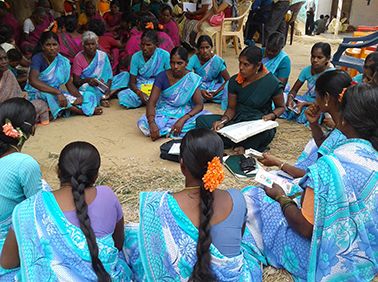
Sometimes they begin in weekly meetings under tiled roofs, where fifteen women sit in a circle with notebooks, passbooks and quiet ambition.
Across Coimbatore district, more than fifty thousand women-led Self-Help Groups (SHGs) gained access to large-scale institutional credit over the years. What might appear on paper as “bank linkage” was, in reality, a capital shift.
Capital moved — not upward, but sideways.
Into villages.
Into kitchens converted into production units.
Into tailoring shops.
Into small livestock sheds.
This was not a subsidy story.
It was a liquidity story.
From Savings Culture to Credit Culture
SHGs traditionally begin with savings discipline. Women deposit small amounts regularly, build collective trust and rotate internal loans.
But savings alone limit growth.
The moment external credit enters the circle, scale changes.
In Kovai district, large-scale bank credit flowed into SHGs — amounting to over ₹1,500 crore across tens of thousands of groups.
The effect was immediate and structural.
Savings groups became enterprise groups.
A woman who once borrowed ₹5,000 internally could now access ₹1 lakh through structured linkage.
That scale changes decision-making.
It allows inventory purchase instead of small-batch production.
It allows bulk buying of raw materials.
It allows livestock purchase instead of daily wage dependency.
The Informal Economy Gets Oxygen
The informal economy is often described as fragile. But fragility usually stems from lack of working capital.
When capital is predictable and accessible, informal businesses stabilise.
In SHG clusters around Madukkarai and Annur, women describe the shift clearly:
“Earlier we managed expenses. Now we manage business.”
The difference lies in liquidity.
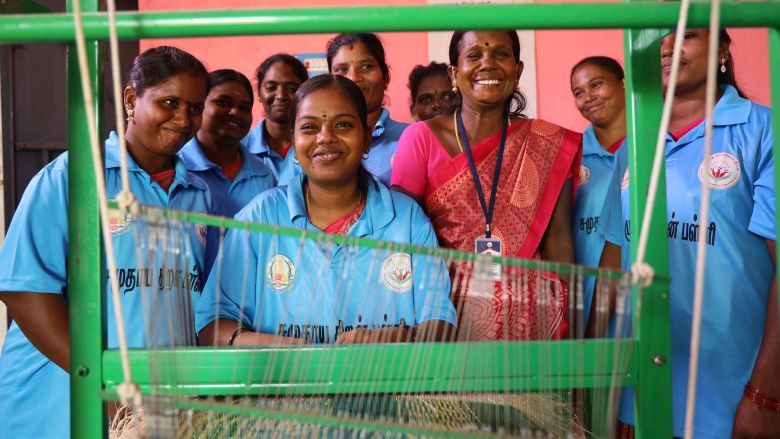
A tailoring unit can take school uniform orders because it can afford cloth upfront.
A snacks unit can expand distribution because it can purchase ingredients in bulk.
A goat-rearing group can increase herd size because credit is available.
Micro capital creates micro confidence.
And micro confidence, multiplied across thousands of groups, becomes district-level economic resilience.
The Gendered Nature of Capital
Traditional credit channels often favour asset-owning households.
SHG-linked credit operates differently.
It places capital in women’s hands.
That alters household economics.
When women control working capital:
- Expenditure patterns change
- Education spending rises
- Debt discipline improves
- Consumption becomes more cautious
Economists often note that women-led enterprises display higher repayment reliability. But beyond repayment rates, the social shift is more significant.
Women move from financial dependents to financial negotiators.
One SHG leader described it succinctly:
“Earlier we asked for money. Now we discuss money.”
That shift is economic power.
Institutional Coordination: Why It Worked
Large-scale SHG credit expansion does not happen organically.
It requires:
- Banking coordination
- Eligibility verification
- Monitoring mechanisms
- Interest subvention structures
- Administrative follow-up
During the period when SP Velumani held ministerial responsibilities while representing the region as MLA, rural development systems in the district operated within a leadership structure that connected policy with locality.
As Minister, he was positioned within the administrative architecture that supports SHG-bank linkage programmes.
As MLA, he remained regionally present — where SHG clusters functioned on the ground.
This dual positioning strengthened the connective tissue between policy allocation and beneficiary access.
Women frequently recall smoother credit cycles and stronger official engagement during that period.
Not because capital appeared magically.
But because coordination improved.
The Multiplier Effect at the Street Level
When over ₹1,500 crore circulates through women-led groups, the impact extends beyond individual enterprises.
It affects:
- Local kirana stores supplying raw materials
- Small transport operators
- Agricultural input dealers
- Local service providers
Each SHG loan triggers micro-transactions across the locality.
In economic terms, this is a multiplier effect.
In everyday language, it is business activity.
Unlike large industrial investments, which concentrate impact, SHG capital disperses it.
It spreads through neighborhoods.
It strengthens small supply chains.
It stabilizes consumption patterns.
Risk and Discipline
Micro-credit carries risk. Poorly managed lending can create over-indebtedness.
The relative stability of SHG networks in Kovai suggests institutional discipline.
Regular meetings.
Peer monitoring.
Collective accountability.
These mechanisms reduce default risk.
When administrative systems support these structures consistently, credit does not become chaos.
It becomes growth.
Capital as Confidence
The most striking change among SHG women is not only income increase.
It is posture.
Women who once hesitated to enter banks now discuss interest rates confidently.
They maintain ledgers.
They negotiate with suppliers.
They expand operations incrementally.
Capital, when accessible, changes self-perception.
And when that shift occurs across fifty thousand groups, it alters the economic character of a district.
Conclusion: A Quiet Capital Movement
The story of SHG Women of Kovai is not about welfare.
It is about liquidity distribution.
Large-scale credit infusion into women-led networks created thousands of micro-enterprises.
Micro-enterprises strengthened local supply chains.
Supply chains stabilized the informal economy.
Such capital revolutions are rarely visible from highways.
They unfold in weekly meetings, handwritten registers and incremental expansions.
Leadership, in this case, functioned not as spectacle but as coordination — aligning banking systems, rural development frameworks and local representation.
When capital reaches disciplined grassroots networks, transformation does not need slogans.
It compounds.
And in Kovai, that compounding quietly reshaped the district’s economic base.