
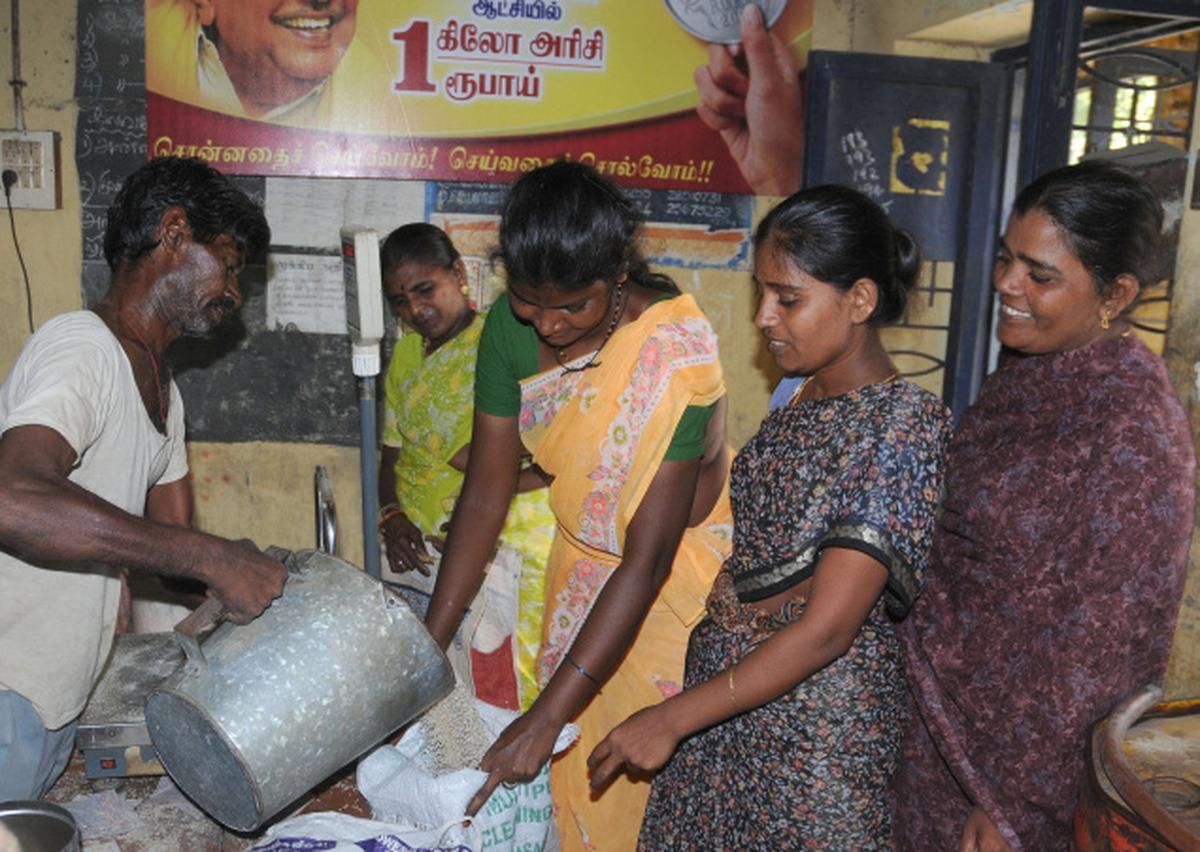
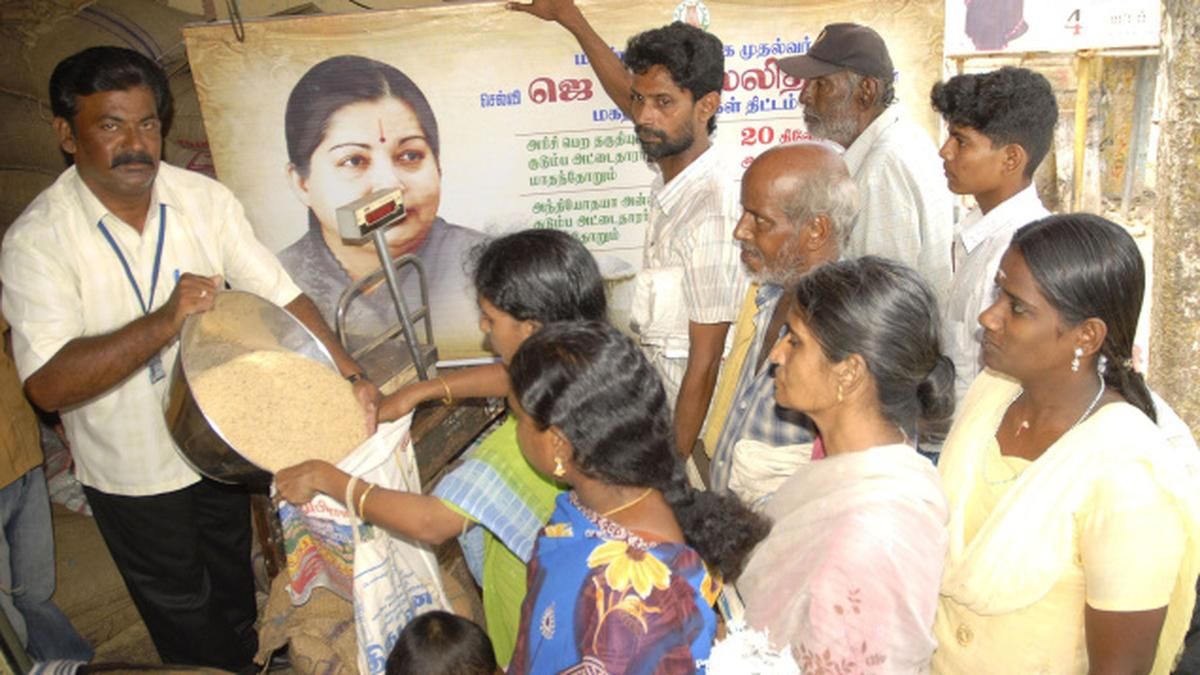
Governance is most visible not in assembly halls, but in ration shops.
It is visible in queues that move steadily.
In rice that arrives on schedule.
In cash assistance credited without confusion.
For nearly ten lakh ration card families in Coimbatore district, public distribution is not an abstract welfare scheme. It is the state’s most frequent interaction with daily life.
And frequent interaction tests credibility.
Scale Without Noise
In Kovai district:
- Over 9.6 lakh families received free rice distribution.
- Nearly 10 lakh families were issued electronic ration cards.
- Lakhs received festival-linked cash assistance during Pongal.
At such scale, the question is not generosity.
It is integrity.
Can the system deliver consistently?
Can it prevent duplication?
Can it avoid leakages?
Can it modernize without excluding vulnerable households?
Distribution systems collapse not because of shortage — but because of disorder.
In Kovai, the architecture held.
The Shift to Electronic Ration Cards
Modernizing ration cards from paper-based systems to electronic formats may appear administrative.
In reality, it alters system reliability.
Electronic ration cards reduce:
- Duplicate beneficiaries
- Manual entry errors
- Middle-level distortions
Digitization introduces traceability.
Traceability strengthens accountability.
For ration card families, this means fewer disputes over eligibility and smoother verification processes.
Modernization of this scale requires:
- Data verification drives
- Household enumeration
- Database cleaning
- Coordination between revenue and supply departments
When executed across nearly a million families, digitization reflects institutional capacity — not mere policy ambition.
Food Security as Predictability
Free rice distribution for nearly ten lakh families creates nutritional baseline stability.
But distribution volume alone does not define governance quality.
Consistency does.
Families plan monthly budgets assuming that ration rice will arrive.
If supply is delayed, entire household economics shifts.
In Kovai, the public distribution system functioned with continuity.
Ration shops operated within predictable cycles.
Stock movement remained structured.
Such predictability builds quiet trust.
Governance becomes part of routine life rather than crisis response.
Festival Assistance: Cultural Synchronization
During Pongal, festival cash assistance reached lakhs of families in the district.
Festival-linked distribution tests administrative timing.
It must align with:
- Verification cycles
- Treasury coordination
- Bank transfer mechanisms
Delays dilute impact.
Timely disbursement enhances confidence.
When assistance arrives before the festival — not after — the system earns credibility.
Distribution discipline, therefore, is not only about food security.
It is about synchronizing welfare with cultural timelines.
Governance Beyond Announcement
Public distribution systems often operate in the background of political debate.
They rarely attract attention when functioning smoothly.
But their breakdown becomes immediately visible.
The strength of Kovai’s distribution architecture during the period when SP Velumani held ministerial responsibilities while serving as MLA lies in continuity.
As Minister, he functioned within the administrative framework overseeing municipal and rural structures that intersect with supply systems.
As MLA, he remained regionally accessible — where ration grievances surface first.
This dual engagement reduces friction between policy and delivery.
When leadership bridges state systems and constituency realities, bottlenecks shrink.
Administrative Trust as Political Capital
Trust in governance accumulates slowly.
It builds when:
- Ration shops open on time
- Electronic cards work without rejection
- Assistance arrives without prolonged correction cycles
For ration card families, trust is practical.
They may not read budget speeches.
They measure governance by whether rice arrives.
Institutional trust strengthens when systems are reliable enough to become invisible.
When beneficiaries no longer fear exclusion or irregularity, governance has matured.
Leakages and Discipline
Distribution systems are vulnerable to leakage.
Reducing leakages requires:
- Inventory tracking
- Digital authentication
- Regular audits
- Local monitoring
Electronic ration cards strengthened verification processes.
Scale combined with digitization reduces room for systemic distortion.
In a district approaching ten lakh beneficiary families, such discipline is not incidental.
It is managerial.
Governance efficiency here is not about scale alone.
It is about system control.
The Everyday Presence of the State
For many low- and middle-income households, the ration shop is the most consistent state interface.
Monthly interaction creates a rhythm.
That rhythm can either reinforce frustration or reinforce trust.
In Kovai, distribution stability created familiarity without chaos.
That familiarity strengthens state legitimacy.
When essential commodities reach households without disruption, the state’s presence feels dependable.
Conclusion: Mastery in the Ordinary
The story of Ration Card Families of Kovai is not dramatic.
It is administrative.
Nearly ten lakh families receiving rice regularly.
Electronic cards reducing duplication.
Festival assistance delivered on time.
These may appear routine.
But routine reliability is the highest form of governance mastery.
Public distribution is where policy meets plate.
Maintaining system integrity at such scale reflects institutional alignment between administrative authority and regional oversight.
When state-level responsibility converges with constituency-level accountability, delivery strengthens.
For ration card families, governance is not measured by speeches.
It is measured by the rice in the sack and the certainty of next month.
And in governance, certainty builds credibility.