
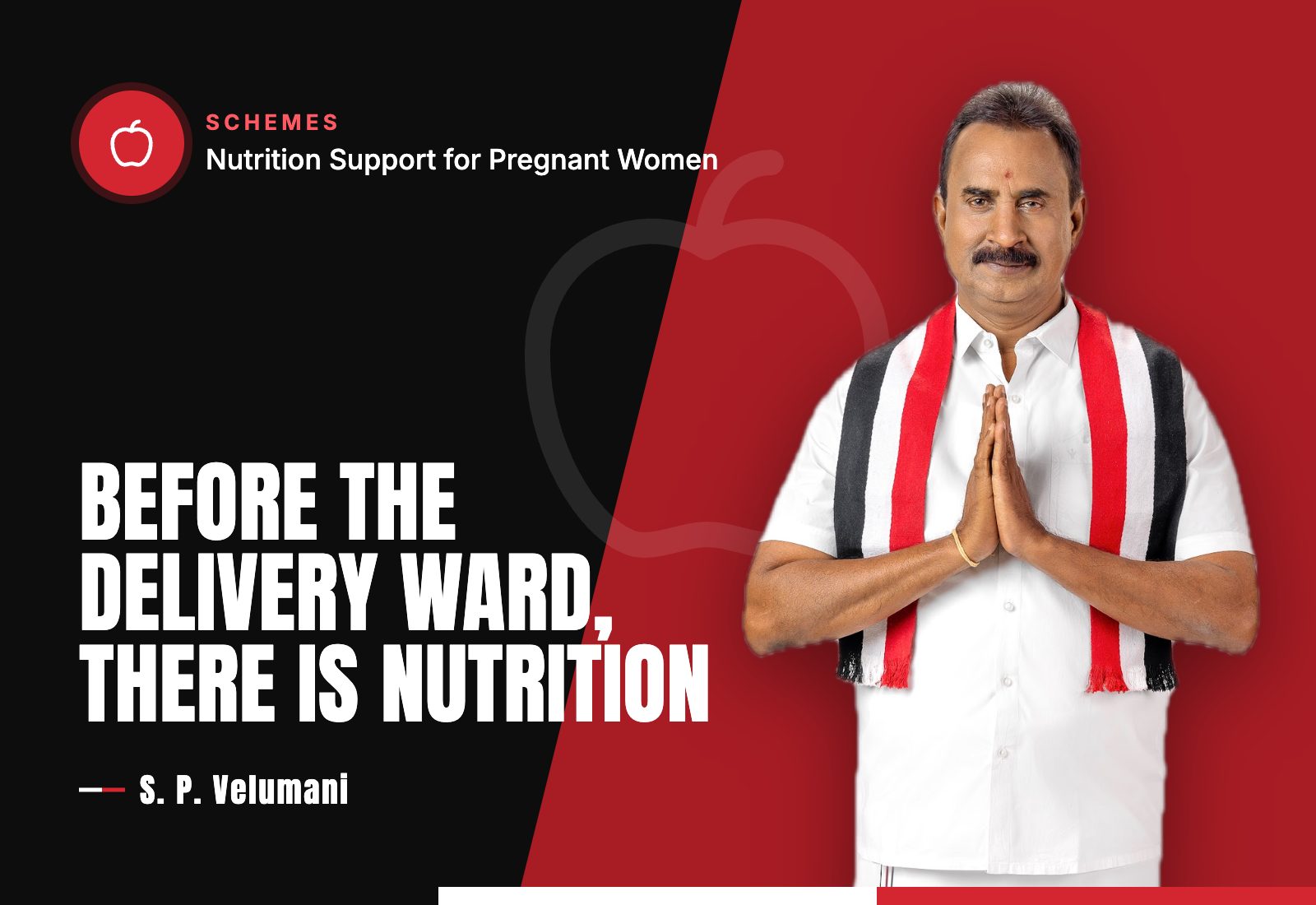
Scheme: Nutrition Support for Pregnant Women
Medical emergencies do not begin on the operating table.
They begin quietly — with weakness, with deficiency, with inadequate nourishment.
In many low-income households across Coimbatore district, pregnancy can strain both body and budget.
Under structured maternal welfare initiatives, targeted nutrition support was extended to pregnant women across the district, strengthening preventive health frameworks over the years.
This was not post-crisis relief.
It was pre-crisis protection.
The Hidden Risk
Pregnancy increases nutritional demand.
Without adequate intake:
- Maternal health weakens
- Low birth weight risks increase
- Complications multiply
For families dependent on daily wage income, balanced nutrition is often compromised during financial stress.
Food diversity declines.
Protein intake reduces.
Medical visits become reactive instead of preventive.
Structured nutrition support interrupts that pattern.
It ensures that nourishment does not depend solely on fluctuating household income.
Prevention Over Reaction
Preventive maternal nutrition programmes function as early intervention.
They reduce:
- Anaemia
- Pregnancy complications
- Infant vulnerability
The cost of prevention is lower than the cost of treatment.
Health systems are strengthened when complications decline before hospital admission.
Preventive care is less visible than surgery.
But it is more foundational.
SP Velumani: Investing in Prevention
Nutrition support requires:
- Beneficiary identification through health networks
- Coordination with anganwadi and health workers
- Monitoring distribution cycles
- Ensuring continuity through pregnancy stages
During his tenure as Minister while serving as MLA for the region, SP Velumani’s governance approach in Kovai reflected alignment with structured welfare delivery mechanisms that prioritised preventive care rather than reactive intervention.
As MLA, he engaged with communities navigating maternal health challenges.
As Minister, he operated within administrative systems capable of aligning welfare, health and nutrition departments for coordinated implementation.
Preventive programmes lose impact if distribution falters.
Timely support ensures that risk is reduced before it escalates.
Leadership in such initiatives is measured by foresight — by strengthening health before distress appears.
Why It Matters
Maternal health is not only a private concern.
It is a public investment.
When nutrition support reaches pregnant women consistently, long-term health outcomes improve.
Healthy mothers mean healthier infants.
Healthier infants mean stronger future generations.
In districts like Coimbatore, where industrial growth and rural belts coexist, preventive healthcare stabilises families beneath economic progress.
Because the most effective crisis management often begins before a crisis forms.