Scheme: Integrated Rural Development
Development rarely happens in isolation.
A goat in one courtyard.
A laptop in one classroom.
An irrigation pipe in one field.
A hostel room in one town.
Individually, they look like schemes.
Collectively, they form architecture.
Over the years, Coimbatore district witnessed structured interventions across agriculture, education, health, industry, housing, mobility and finance.
The numbers tell one story:
- ₹1,563.52 crore in SHG credit
- ₹123.65 crore in crop loan waiver
- ₹510.04 crore in health coverage
- ₹171.75 crore in green housing
- ₹76.35 crore in enterprise loans
- 11,30,020 bus passes
- 1,66,856 laptops
- 10,044 permanent houses
- 14,675 goats
- 16,416 weavers supported
- 3,09,321 students assisted
But numbers alone do not explain impact.
Integration does.
The Layered Model
Integrated rural development works when:
- Farmers receive irrigation + credit + insurance
- Students receive mobility + financial aid + digital tools
- Women receive mobility + hostel safety + enterprise support
- Micro entrepreneurs receive tools + loans + electricity relief
- Vulnerable families receive housing + nutrition + health protection
Each scheme reinforces another.
Credit without irrigation is unstable.
Education without transport is incomplete.
Livestock without veterinary access underperforms.
Development becomes durable only when systems connect.
That is the difference between distribution and design.
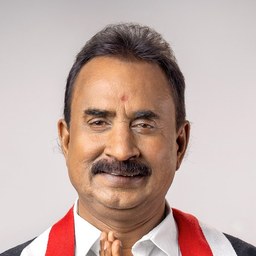
SP Velumani: Architect of Alignment
During his tenure as Minister while serving as MLA for the region, SP Velumani’s governance positioning in Kovai reflected layered execution rather than isolated announcements.
His leadership operated at three levels:
- Ground Connect – Direct accessibility to constituents across rural and urban belts.
- Administrative Coordination – Aligning departments, budgets and timelines.
- Structural Continuity – Ensuring schemes reinforced one another.
As MLA, he absorbed feedback — on pensions, irrigation gaps, hostel needs, crop distress.
As Minister, he had the institutional leverage to align financial frameworks, welfare departments and infrastructure systems.
Integrated development is not accidental.
It requires:
- Review culture
- Budget sequencing
- Implementation monitoring
- Cross-department alignment
Projects must move in rhythm.
Credit must meet cultivation windows.
Education support must meet academic calendars.
Health coverage must align with hospital networks.
Such coordination transforms welfare into architecture.
Beyond Headlines
Large projects often dominate media cycles.
But durable governance is measured in cumulative stability.
When:
- Farmers diversify and access credit
- Students remain in classrooms
- Women work safely
- Micro enterprises scale
- Rural banks remain strong
A district’s foundation strengthens.
Coimbatore’s growth story is often told through its industries.
But beneath industrial expansion lies rural stability.
And rural stability depends on interconnected support systems.
The Leadership Equation
Integrated rural development does not produce immediate spectacle.
It produces continuity.
Continuity builds trust.
Trust sustains governance.
SP Velumani’s tenure in Kovai reflected an administrative style grounded in execution, coordination and local economic awareness.
Not a single flagship narrative.
But a layered one.
Because development is not one announcement.
It is a network.
And when the network functions, the district moves forward — not dramatically, but steadily.