
A house is not just shelter.
It is certainty.
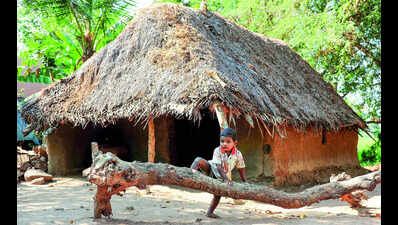
In many rural and semi-urban pockets of Coimbatore district, families once lived in structures that bent with the wind, leaked during monsoons and cracked under summer heat.
Rain was not romantic.
It was anxiety.
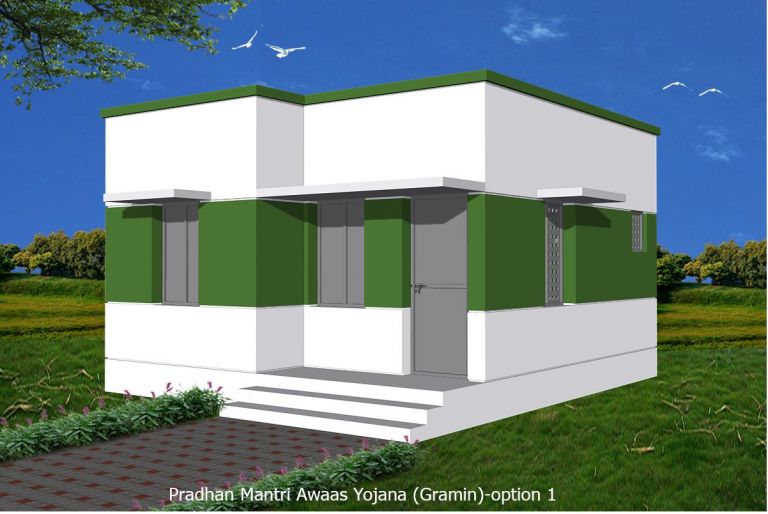
Across the district, more than ten thousand families moved from temporary dwellings to permanent green houses built under structured housing schemes.
On paper, it is a housing statistic.
In lived experience, it is permanence.
The End of Seasonal Fear
Before concrete walls, monsoon forecasts meant preparation.
Buckets placed under leaking roofs.
Plastic sheets tightened with rope.
Children shifted to dry corners at night.
For families in fragile housing, rain did not signal comfort. It signaled vulnerability.
One beneficiary from the outskirts of Kinathukadavu described the first heavy rain after moving into her new house:
“We slept without waking up.”
That sentence reveals the transformation.
Housing security removes a recurring stress that families normalize over years.
When the roof holds, fear reduces.
When fear reduces, stability begins.
An Address That Exists
Temporary housing often lacks formal documentation. Without clear property records, families struggle with identity proofs, bank applications and school admissions.
Permanent housing changes that.
A concrete house with an official allotment creates an address that exists in records.
Children write it on exam forms.
Banks recognize it.
Utility connections stabilize.
An address is more than location.
It is administrative visibility.
Families move from informal existence to documented presence.
That shift carries psychological weight.
Space Changes Relationships
Housing transformation is not only structural.
It is relational.
In cramped huts, privacy is scarce.
In unstable structures, possessions remain minimal.
With permanent housing, families reorganize.
A corner becomes a study space.
A small hall becomes a gathering area.
A separate kitchen reduces smoke inhalation.
One elderly beneficiary said:
“We can invite relatives without embarrassment.”
Housing restores social confidence.
It allows families to participate in community life without hesitation.
Asset, Not Assistance
Unlike monthly benefits, housing is not recurring.
It is capital.
A permanent structure becomes an asset — something that can be inherited, leveraged and improved.
For low-income families, asset creation is rare.
Housing schemes change that equation.
The house is not consumed.
It remains.
Over time, families add tiles, paint walls, build compound boundaries.
Permanence invites improvement.
Environmental and Structural Stability
The green housing model also introduced improved construction quality.
Concrete walls resist seasonal damage.
Structured roofs withstand wind pressure.
Elevated flooring reduces water entry during heavy rains.
In flood-prone belts, this matters.
Housing durability reduces long-term repair costs.
It protects savings.
It protects health.
Stability in housing indirectly stabilizes expenditure.
Leadership and Local Alignment
Large-scale housing implementation requires:
- Land identification
- Beneficiary verification
- Construction oversight
- Fund release monitoring
During the period when SP Velumani held ministerial responsibilities while serving as MLA for the region, housing rollout in Kovai district operated within aligned administrative channels.
Ministerial oversight enables inter-department coordination.
MLA presence ensures ground-level monitoring.
Housing beneficiaries often recall inspection visits and follow-ups during construction phases.
“He came and saw the progress,” one resident noted.
For families investing hope in a permanent structure, oversight builds reassurance.
A half-built house is uncertainty.
A completed house is security.
Generational Permanence
The emotional weight of housing is intergenerational.
Parents speak not only of comfort today but of what the house represents for their children.
“My son will not start from zero,” one father said.
Permanent housing creates starting points.
Children grow up in stable environments. Study routines improve. Health risks reduce.
The house becomes a base.
Unlike temporary dwellings that erode with time, concrete houses signal continuity.
Security Without Noise
Unlike mobility schemes or enterprise credit, housing does not produce visible activity every month.
Its impact is silent.
It is seen in:
- Dry floors during monsoon
- Lockable doors
- Safe storage of belongings
- Stable sleep
Security does not shout.
It settles.
Conclusion: The Power of Permanence
The story of Housing Beneficiaries of Kovai is not about applause.
It is about grounding.
More than ten thousand families shifted from vulnerability to stability.
From seasonal fear to structural certainty.
From informal shelter to documented address.
Housing is not just a welfare intervention.
It is permanence delivered.
When administrative authority aligns with regional accountability, large-scale housing programmes move from blueprint to brick.
For the families now living under reinforced roofs, the difference is simple:
They no longer plan for collapse.
They plan for tomorrow.
And permanence changes everything.